STORM PREP · BACKUP POWER
Portable Generator vs Whole-Home Standby Generator for a Florida Home
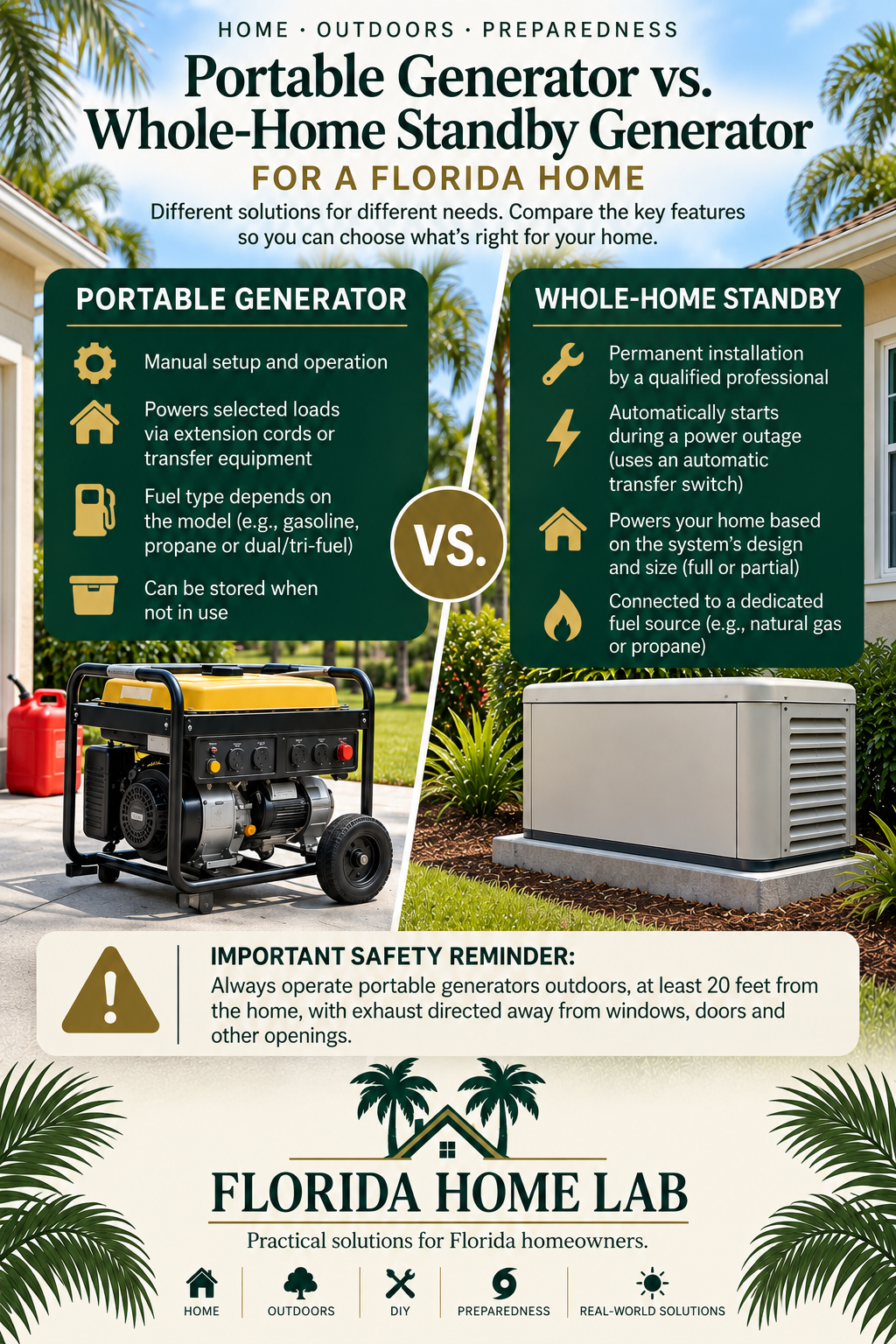
The biggest difference is not simply generator size. A portable generator is a flexible backup source that you position and operate when needed. A standby generator is a permanently installed system designed to start and transfer power automatically when utility power fails. For a Florida homeowner, the better fit depends on which loads must stay powered, how much outage setup you are willing to do, your fuel plan and how much you want to invest in backup-power infrastructure.
Research note: This is a research-based guide, not a claim that Florida Home Lab has personally tested a whole-home standby generator. Permanent generator and transfer-equipment installations should follow manufacturer instructions and applicable electrical, fuel-gas, permitting and local code requirements.
Portable and standby generators solve the outage differently
A portable generator normally requires the homeowner to move the unit into a safe operating location, start it, manage its fuel and connect the loads being backed up. Loads may be connected directly with properly rated cords or, where properly installed, through suitable transfer equipment that prevents the generator from feeding utility lines.
A standby generator is permanently installed. The U.S. Department of Energy describes standby systems as using an automatic transfer switch to detect loss of utility power, start the generator and transfer the selected electrical load to generator power. When utility service returns, the transfer switch moves the load back and the generator shuts down.
How much of the house do you actually need to power?
This question should come before choosing either system. Refrigeration, lighting, communications and selected appliances require far less backup capacity than trying to operate most of a home's normal electrical loads. Large loads such as central air conditioning, electric water heating, electric cooking equipment and well or pool equipment can change the required generator capacity substantially.
If you are still determining your loads, start with What Size Generator Do I Need for a Florida Home? before comparing equipment.
Where a portable generator makes sense
A portable generator can be a practical choice when the goal is to keep selected essential loads operating rather than recreate normal whole-house electrical service. It also lets the homeowner store the generator when it is not needed. Depending on the specific model, portable generators may operate on gasoline, propane, natural gas or more than one supported fuel.
That flexibility comes with more hands-on work during an outage. The generator has to be positioned safely, started, connected correctly, monitored and refueled or supplied with fuel. If you are comparing fuel options, see Dual-Fuel vs Tri-Fuel Generator for a Florida Home.
Where a standby generator makes sense
A permanently installed standby system is built around automatic operation. That can matter when an outage happens while nobody is home or when minimizing manual setup is a priority. Depending on the system design and capacity, the installation can support selected circuits or a much larger portion of the home's electrical load.
The tradeoff is infrastructure. The generator, transfer equipment, electrical work and fuel supply become part of the home. Routine inspection and maintenance also matter: DOE notes that standby generators and automatic transfer switches require ongoing maintenance so they are ready when utility power fails.
Transfer equipment is a major part of the decision
A generator should never be connected to household wiring in a way that can backfeed power onto utility lines. Florida emergency-management guidance warns against connecting a portable generator directly to a home's electrical system because of the danger backfeeding can create for utility workers and others. If generator power will feed installed household wiring, the connection should use suitable transfer equipment and be installed in accordance with applicable requirements. In a typical standby system, an automatic transfer switch separates the utility source from generator power and handles the changeover automatically.
If a portable generator will only power individual appliances, properly rated outdoor extension cords may be part of the plan. Our generator extension-cord guide covers the basic load, length, rating and plug considerations.
Florida hurricane safety changes the portable-generator equation
Portable generators create a carbon-monoxide hazard and must not be operated in a home, garage, basement, crawlspace or shed. Current CPSC hurricane-season guidance says to operate portable generators outdoors only, at least 20 feet from homes and buildings, with exhaust directed away from windows, doors and vents. Florida emergency-management guidance likewise emphasizes outdoor operation away from openings and protection from wet conditions without restricting required airflow.
That operating-location requirement is worth planning before hurricane season. A homeowner needs a location that satisfies the generator manufacturer's instructions and safety guidance while also accounting for rain, cords or connection equipment, exhaust direction and access for refueling.
Fuel planning matters with either system
A portable generator may use gasoline, propane, natural gas or multiple fuels depending on the model. A standby generator may use natural gas, propane, diesel or another supported fuel depending on the installation. Fuel choice affects how the system is prepared for a long outage, so generator capacity should not be considered independently from the fuel supply available at the property.
For portable equipment, our Florida hurricane generator-accessories guide covers fuel storage and other supporting equipment that can become part of the outage plan.
Do not overlook maintenance
Neither option is maintenance-free. Portable generators should be checked and maintained before they are needed, and stored fuel and batteries require attention according to the equipment manufacturer's instructions. Permanently installed standby systems also require scheduled maintenance, even though their outage operation can be largely automatic.
A practical way to choose
Start with the loads you cannot reasonably lose during a multi-hour or multi-day outage. Then decide whether you are comfortable manually deploying and operating a portable generator. If selected essential loads are enough and hands-on setup is acceptable, a portable system may meet the requirement. If automatic operation and broader integrated backup are priorities, a professionally designed standby system is the category to investigate.
The key is to compare complete systems rather than generator engines alone: generator capacity, fuel, transfer equipment, installation, operating location, maintenance and the electrical loads all work together.
Sources
Safety and system information in this guide was checked against the U.S. Consumer Product Safety Commission's 2026 hurricane-season generator guidance, Florida Division of Emergency Management generator-safety guidance, and U.S. Department of Energy standby-generator and automatic-transfer-switch guidance.